
Power tools have become essential equipment for homeowners, DIY enthusiasts, and professionals alike. Whether you’re assembling furniture, renovating a room, building a deck, or completing basic home repairs, the right power tools can save time, improve accuracy, and make projects significantly easier.
For beginners, however, the wide variety of available tools can feel overwhelming. This guide explains the most common types of power tools, what they are used for, and which tools are worth owning first.
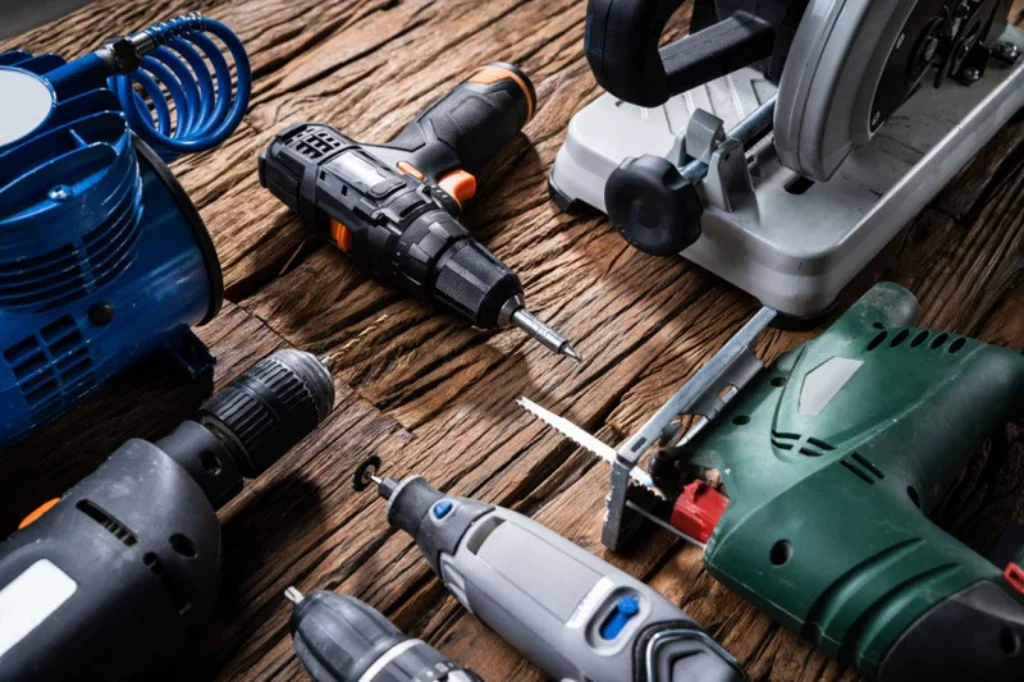
What Are Power Tools?
Power tools are tools powered by electricity, batteries, compressed air, or fuel rather than manual effort alone.
Compared to traditional hand tools, power tools offer:
- Faster project completion
- Greater precision
- Reduced physical effort
- Increased productivity
Today’s homeowners can accomplish many tasks that previously required professional contractors simply by using the right power tools.
Corded vs. Cordless Power Tools
Before choosing individual tools, it’s important to understand the two main categories.
Corded Power Tools
Corded tools plug directly into an electrical outlet.
Advantages
- Continuous power
- No battery charging required
- Often more affordable
Disadvantages
- Limited mobility
- Requires access to power outlets
- Extension cords may be needed
Cordless Power Tools
Cordless tools use rechargeable batteries.
Advantages
- Greater portability
- Convenient for outdoor projects
- No cords to manage
Disadvantages
- Limited runtime
- Batteries eventually require replacement
- Higher initial cost
Many homeowners now prefer cordless systems because multiple tools can often share the same battery platform.
Cordless Drill
The cordless drill is often considered the most useful power tool for beginners.
Common Uses
- Drilling holes
- Installing screws
- Furniture assembly
- Hanging shelves
- Home repairs
Why Beginners Need One
A cordless drill is versatile, easy to use, and suitable for hundreds of common household tasks.
Impact Driver
An impact driver looks similar to a drill but is designed specifically for driving screws and fasteners.
Common Uses
- Deck construction
- Fence installation
- Large screws
- Lag bolts
Benefits
- Greater torque
- Reduced wrist strain
- Faster fastening
Many homeowners eventually pair an impact driver with a cordless drill.
Circular Saw
A circular saw is one of the most popular cutting tools available.
Common Uses
- Cutting plywood
- Trimming lumber
- Building shelves
- Home renovation projects
Advantages
- Fast cutting
- Portable
- Suitable for many materials
For beginners interested in woodworking, a circular saw is often one of the first major purchases.
Jigsaw
A jigsaw uses a narrow blade that moves up and down rapidly.
Common Uses
- Curved cuts
- Decorative shapes
- Detailed woodworking
- Cutting around obstacles
Advantages
- Easy to control
- Beginner-friendly
- Excellent versatility
A jigsaw complements a circular saw by handling cuts that straight-blade tools cannot easily perform.
Reciprocating Saw
Often called a “demo saw,” a reciprocating saw is designed for demolition and rough cutting.
Common Uses
- Removing old materials
- Cutting pipes
- Trimming branches
- Remodeling projects
Advantages
- Powerful
- Fast material removal
- Works in tight spaces
It is especially useful during renovation projects.
Angle Grinder
An angle grinder is a high-speed rotating tool designed for cutting, grinding, and polishing.
Common Uses
- Metal cutting
- Rust removal
- Sharpening tools
- Surface preparation
Safety Note
Always wear proper eye and hand protection when operating an angle grinder.
Random Orbital Sander
A random orbital sander helps smooth surfaces before painting or finishing.
Common Uses
- Furniture refinishing
- Woodworking projects
- Surface preparation
- Paint removal
Benefits
- Smooth finishes
- Reduced sanding marks
- Faster than manual sanding
Oscillating Multi-Tool
One of the most versatile tools available, an oscillating multi-tool can perform a variety of tasks with interchangeable attachments.
Common Uses
- Flush cuts
- Detail sanding
- Grout removal
- Trimming door frames
Why Homeowners Like It
Its versatility makes it useful for projects throughout the house.
Nail Gun
A nail gun drives nails quickly and efficiently.
Common Uses
- Trim installation
- Furniture projects
- Framing work
- Interior finishing
Benefits
- Faster than hammering
- Consistent results
- Improved productivity
Battery-powered nail guns have become increasingly popular among DIY homeowners.
Shop Vacuum
While not technically a cutting or drilling tool, a shop vacuum is invaluable during projects.
Common Uses
- Dust cleanup
- Sawdust removal
- Workshop maintenance
- Wet and dry cleanup
A cleaner workspace often leads to safer and more efficient work.
Essential Safety Equipment
Power tools should always be used safely.
Important protective equipment includes:
- Safety glasses
- Hearing protection
- Dust masks
- Work gloves
- Proper footwear
Following manufacturer instructions is critical for preventing injuries.
Best Power Tools for Beginners
If you’re building your first collection, start with these essentials:
1. Cordless Drill
The most useful all-around power tool.
2. Impact Driver
Excellent for driving screws and fasteners.
3. Circular Saw
Perfect for basic cutting projects.
4. Random Orbital Sander
Ideal for woodworking and finishing.
5. Shop Vacuum
Helps maintain a clean and safe workspace.
These five tools can handle a large percentage of common home improvement projects.
Common Beginner Mistakes
Buying Too Many Tools at Once
Start with the tools you’ll actually use.
Ignoring Battery Compatibility
Choosing one battery platform can save money over time.
Purchasing the Cheapest Option
Quality tools often last longer and perform better.
Neglecting Safety Equipment
Protective gear should be considered part of every tool purchase.
Frequently Asked Questions
What is the first power tool every homeowner should buy?
A cordless drill is generally considered the most useful and versatile power tool for beginners.
Are cordless tools powerful enough?
Modern cordless tools provide excellent performance for most home improvement projects.
Is an impact driver necessary?
Not immediately, but it becomes extremely useful once projects involve larger screws and fasteners.
Which power tool is best for cutting wood?
A circular saw is one of the best all-around cutting tools for homeowners and DIY enthusiasts.
Final Thoughts
Power tools can transform the way homeowners approach maintenance, repairs, and DIY projects. Understanding the purpose of each tool helps beginners build a practical collection without overspending. Starting with versatile essentials such as a cordless drill, circular saw, and sander provides a strong foundation for tackling a wide variety of projects. As your skills and project needs grow, additional tools can be added to expand your capabilities and improve efficiency.