
A well-maintained lawn can significantly improve the appearance of your property, but choosing the right lawn mower is essential for achieving the best results. With so many options available today, homeowners often struggle to decide which mower fits their yard size, terrain, and budget.
This guide will help you understand the different types of lawn mowers, key features to consider, and how to choose the best mower for your specific needs.
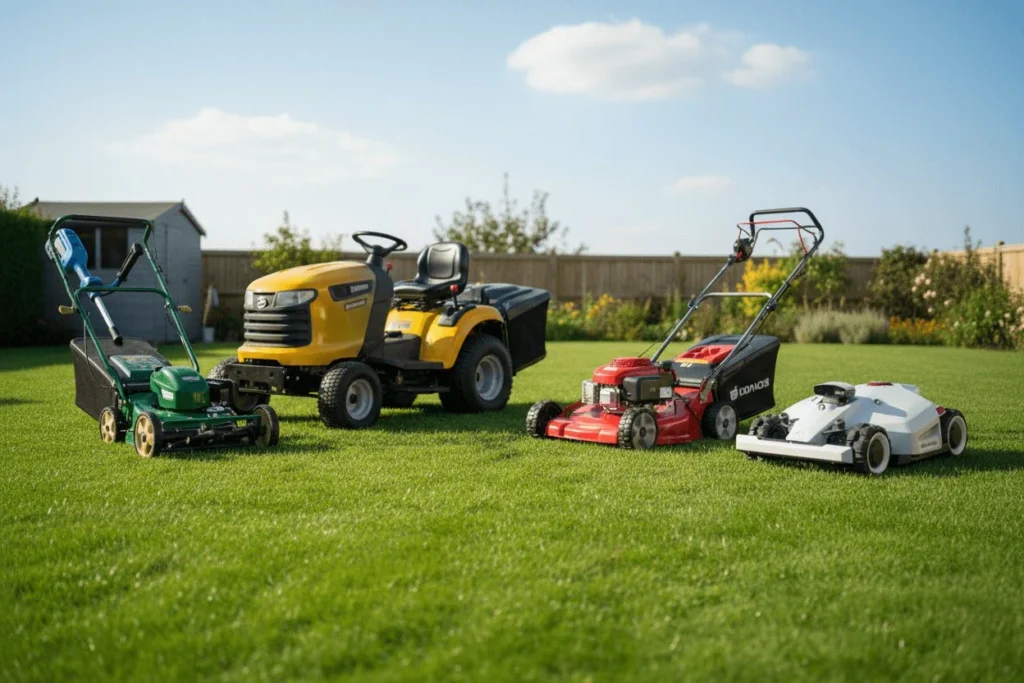
Understanding the Different Types of Lawn Mowers
Push Mowers
Push mowers require the user to manually push the machine across the lawn. They are typically lightweight, affordable, and easy to maintain.
Best for:
- Small yards
- Flat terrain
- Budget-conscious homeowners
Advantages:
- Lower purchase cost
- Minimal maintenance
- Easy storage
Disadvantages:
- Requires more physical effort
- Less efficient for large properties
Self-Propelled Mowers
Self-propelled mowers use a drive system that helps move the mower forward, reducing the amount of effort required.
Best for:
- Medium-sized yards
- Slightly sloped terrain
- Homeowners seeking greater convenience
Advantages:
- Easier to operate
- Faster mowing
- Better performance on hills
Disadvantages:
- Higher cost than push mowers
- Slightly more maintenance
Riding Lawn Mowers
Riding mowers allow the operator to sit and drive the machine, making them ideal for larger properties.
Best for:
- Large lawns
- Properties over half an acre
- Frequent mowing
Advantages:
- Comfortable operation
- Significant time savings
- Handles large areas efficiently
Disadvantages:
- Higher initial investment
- Requires storage space
Zero-Turn Mowers
Zero-turn mowers are designed for maximum maneuverability and professional-quality cutting performance.
Best for:
- Large properties
- Complex landscapes
- Experienced users
Advantages:
- Exceptional maneuverability
- Fast mowing speeds
- Precise cutting around obstacles
Disadvantages:
- Premium pricing
- Learning curve for beginners
Battery-Powered Mowers
Battery-powered lawn mowers have become increasingly popular due to their convenience and environmental benefits.
Best for:
- Small to medium lawns
- Homeowners seeking low maintenance
- Environmentally conscious users
Advantages:
- Quiet operation
- No fuel required
- Easy startup
Disadvantages:
- Limited runtime
- Battery replacement costs
Choosing a Mower Based on Yard Size
Selecting a mower that matches your lawn size is one of the most important factors.
| Yard Size | Recommended Mower Type |
|---|---|
| Under 1/4 Acre | Push Mower |
| 1/4 to 1/2 Acre | Self-Propelled Mower |
| 1/2 to 1 Acre | Riding Mower |
| Over 1 Acre | Zero-Turn Mower |
Using a mower that is too small for your property can increase mowing time and lead to unnecessary wear on the machine.
Important Features to Consider
Cutting Width
Cutting width determines how much grass the mower cuts in a single pass.
- 20–22 inches: Small lawns
- 22–30 inches: Medium lawns
- 30+ inches: Large properties
A wider cutting deck can reduce mowing time significantly.
Power Source
When choosing a lawn mower, consider the available power options:
Gas-Powered
- Longer runtime
- Greater power
- Suitable for larger yards
Battery-Powered
- Quieter operation
- Lower maintenance
- No fuel or emissions
Grass Collection Options
Many modern mowers offer multiple grass management methods:
- Bagging
- Mulching
- Side discharge
Mulching is often preferred because it returns nutrients to the soil.
Adjustable Cutting Height
Look for a mower that offers multiple height settings.
Benefits include:
- Better seasonal lawn care
- Healthier grass growth
- Improved appearance
Gas vs. Battery Lawn Mowers
Gas Lawn Mowers
Pros
- Powerful performance
- Long runtime
- Ideal for large properties
Cons
- Regular maintenance
- Fuel costs
- Higher noise levels
Battery Lawn Mowers
Pros
- Quiet operation
- Easy maintenance
- Environmentally friendly
Cons
- Limited battery life
- Longer charging times
- Less suitable for very large properties
Common Mistakes When Buying a Lawn Mower
Choosing Based Only on Price
A cheaper mower may cost more in the long run if it doesn’t meet your needs.
Ignoring Yard Size
Always match the mower to the size of your property.
Overlooking Terrain
Hilly or uneven lawns often require self-propelled or riding mowers.
Forgetting Storage Requirements
Large riding mowers need adequate storage space in a garage or shed.
Maintenance Tips for Longer Mower Life
Proper maintenance can extend the life of your lawn mower and improve performance.
- Clean the deck after mowing
- Sharpen blades regularly
- Check tire pressure
- Replace air filters as needed
- Follow manufacturer maintenance schedules
Routine care can help prevent costly repairs and maintain a cleaner cut.
Frequently Asked Questions
What is the best lawn mower for a beginner?
A self-propelled mower is often the best choice because it balances ease of use, affordability, and performance.
Are battery-powered lawn mowers worth it?
Yes. They are ideal for homeowners with small to medium-sized yards who want low maintenance and quiet operation.
How often should I mow my lawn?
Most lawns benefit from mowing once per week during the growing season, although growth rates vary by climate and grass type.
What cutting height is best?
Most grasses perform best when only one-third of the blade height is removed during each mowing session.
Final Thoughts
The best lawn mower depends on your lawn size, terrain, budget, and maintenance preferences. Push mowers work well for smaller yards, while self-propelled models offer greater convenience for medium-sized properties. Homeowners with large lawns should consider riding or zero-turn mowers to save time and effort.
By understanding the available mower types and key features, you can make a confident purchasing decision and keep your lawn looking its best throughout the year.